What is Judo?
Judo, meaning “the gentle way” or “the way of giving way”, is a Japanese martial art and a sport developed by Dr. Jigoro Kano in 1882. Kano refined the ancient fighting system of Jujutsu into a system based on the principles of “maximum efficiency with minimum effort” and “mutual welfare and benefit.”
The first principle entails using a combination of technique and timing in order to throw an opponent using as little physical strength as possible. The second principle means that although Judo is a physical art by nature, applying the principles of Judo to everyday activities enables individuals to translate the ideas of maximum efficiency and “giving way” in a physical sense into mutual aid and concession in society, resulting in harmony among people.
In eliminating the “dangerous” techniques of Jujutsu such as kicking, punching, and small joint locks, Kano developed a system in which techniques could be practiced at full speed and power with little risk of injury. The techniques that were kept and further refined comprise a large variety of throws as well as techniques for controlling an opponent on the ground, such as pins, chokes, and arm locks. In accordance with the principle of maximum efficiency, students first master “ukemi”, the art of falling properly to avoid injury, so that they can train daily without requiring time to recover between practices.
As a sport, points are awarded for throwing or pinning an opponent. Alternatively, a match may be won by forcing an opponent to submit to a choke or arm lock. Judo has been a sanctioned Olympic sport since the 1964 Tokyo Olympics, and there are countless levels of competitions in which players of all levels of experience can test their skills against others.
Whether it is practiced for exercise, recreation, competition, self-defense, or as a way of life, Judo is an inexpensive activity that can be enjoyed all year round by women and men, boys and girls of all ages. Judo dojos around the world welcome players of all levels of experience, and anyone interested is encouraged to stop by and observe classes.
Quick Guide to Judo
This short video by the International Judo Federation explains the sport of Judo
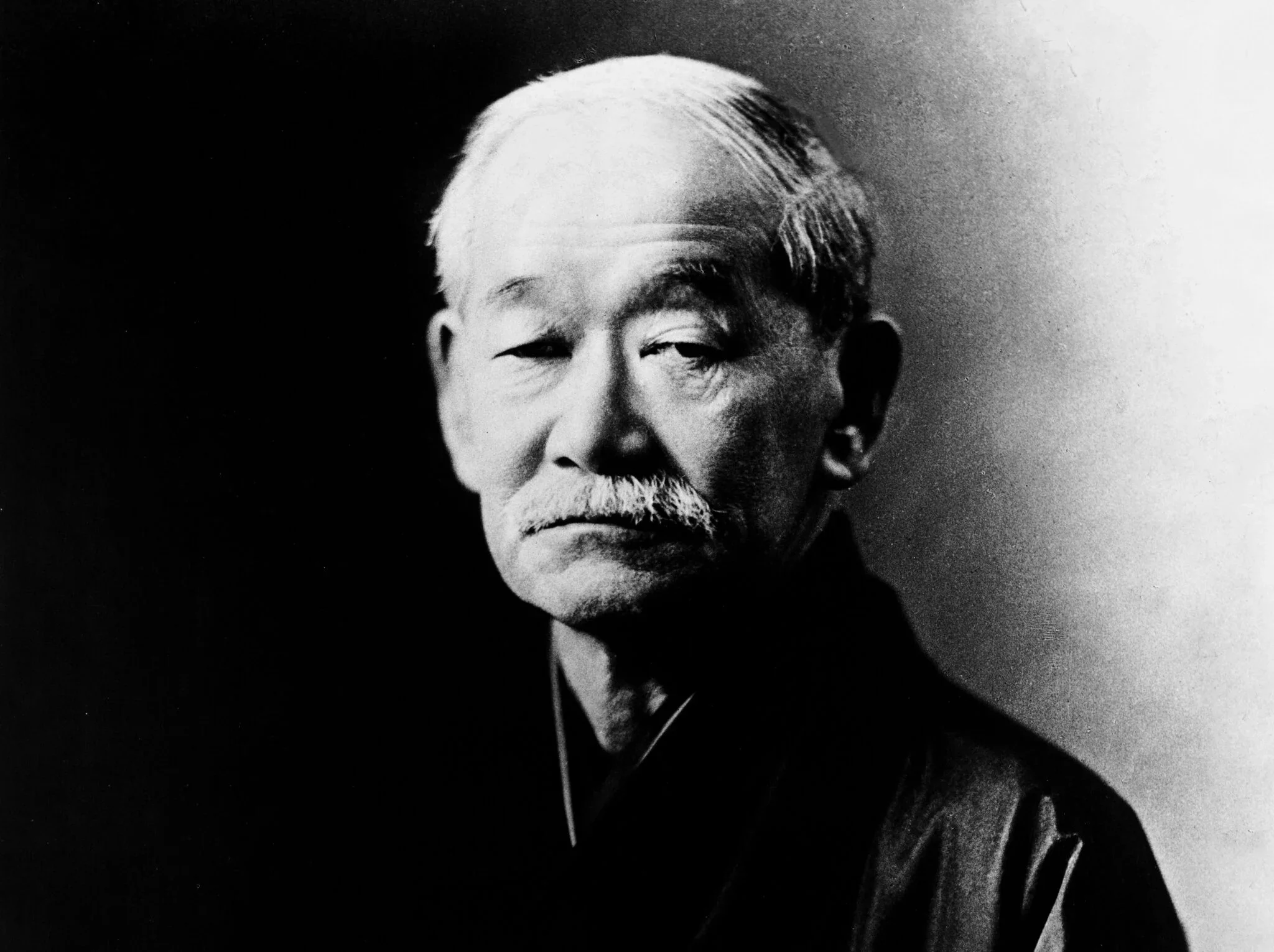
Jigoro Kano
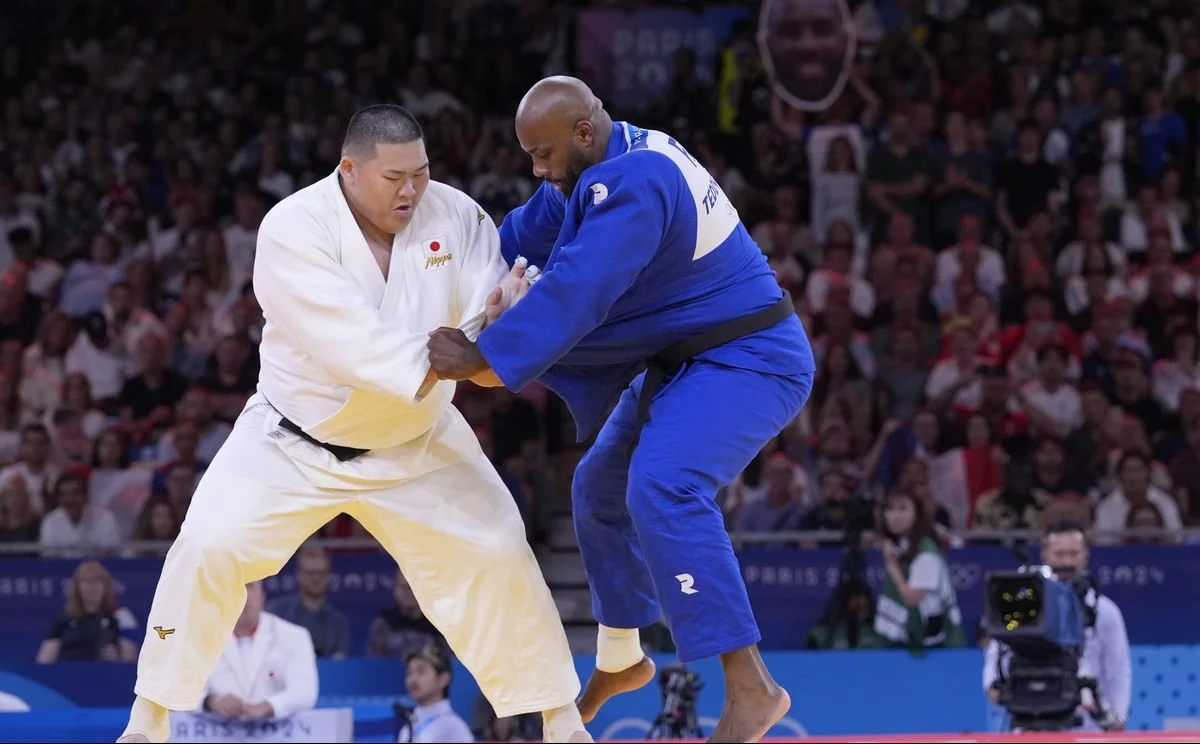
Judo at the Olympics
Techniques of Judo
There are three basic categories of waza (技; techniques) in judo: nage-waza (投げ技; throwing techniques), katame-waza (固技; grappling techniques) and atemi-waza (当て身技; striking techniques). Judo is mostly known for nage-waza and katame-waza, because striking techniques of any kind are restricted in the competitive judo.
Judo practitioners typically devote a portion of each practice session to ukemi (受け身; break-falls), in order that nage-waza can be practiced without significant risk of injury. Several distinct types of ukemi exist, including ushiro ukemi (後ろ受身; rear breakfalls); yoko ukemi (横受け身; side breakfalls); mae ukemi (前受け身; front breakfalls); and zenpo kaiten ukemi (前方回転受身; rolling breakfalls)
The person who performs a waza is known as tori (取り; literally "taker") and the person to whom it is performed is known as uke (受け; "receiver").
Nage-waza (throwing techniques)
Nage-waza include all techniques in which tori attempts to throw or trip uke, usually with the aim of placing uke on their back. Each technique has three distinct stages:
Kuzushi (崩し): the opponent becoming off balanced;
Tsukuri (作り): turning in and fitting into the throw;
Kake (掛け): execution and completion of the throw.
Nage-waza are typically drilled by the use of uchi-komi (内込), repeated turning-in, taking the throw up to the point of kake.
Traditionally, nage-waza are further categorised into tachi-waza (立ち技; standing techniques), throws that are performed with tori maintaining an upright position, and sutemi-waza (捨身技; sacrifice techniques), throws in which tori sacrifices his upright position in order to throw uke.
Tachi-waza are further subdivided into te-waza (手技; hand techniques), in which tori predominantly uses their arms to throw uke; koshi-waza (腰技; hip techniques) throws that predominantly use a lifting motion from the hips; and ashi-waza (足技; foot and leg techniques), throws in which tori predominantly utilises their legs.
Katame-waza (grappling techniques)
Katame-waza is further categorised into osaekomi-waza (抑込技; holding techniques), in which tori traps and pins uke on their back on the floor; shime-waza (絞技; strangulation techniques), in which tori attempts to force a submission by choking or strangling uke; and kansetsu-waza (関節技; joint techniques), in which tori attempts to submit uke by painful manipulation of their joints.
A related concept is that of ne-waza (寝技; prone techniques), in which waza are applied from a non-standing position.
In competitive judo, Kansetsu-waza is currently limited to elbow joint manipulation. Manipulation and locking of other joints can be found in various kata, such as Katame-no-kata and Kodokan goshin jutsu.
Benefits of Judo
Learning judo is a partnership endeavor, meaning that you always practice with another person one-on-one. Learning judo can improve a person’s endurance, coordination, timing, reflexes, strength, self-confidence, mental health, and self-discipline. The learning process is broken down into a series of exercises and patterned routines to develop skill. A great deal of pleasure and fun is gained when working together in this friendly atmosphere which helps to promote good sportsmanship.
Learning judo is a progressive study from the basics and fundamentals to the more complex techniques. Children and teenagers progress through a series of belt colors to signify their rank. From the lowest to the highest the ranks are white, yellow, orange, green, blue, and purple belts. For senior students and adults the order is: white, yellow, orange, and green, brown, black. There are three grades of brown and ten grades of black belt. When a player achieves a rank of 6th degree black belt, a red and white belt is awarded as a ceremonial belt. A 9th degree black belt is awarded a solid red belt.
Promotion depends on the time spent in the previous grade, performance, proper attitudes, etiquette, and awareness for safety. Students earn a promotion by formal demonstration of their judo skills during special classes for review and examination and in tournaments. While it is not mandatory for students to participate in tournaments, those students who do so will advance more quickly. It is not necessary for junior players to win in order to be promoted in the lower ranks. Progress through demonstrations of their required judo techniques and knowledge of judo are the criteria that we will look at. Of course, winning by using good judo will earn promotions more quickly as well.
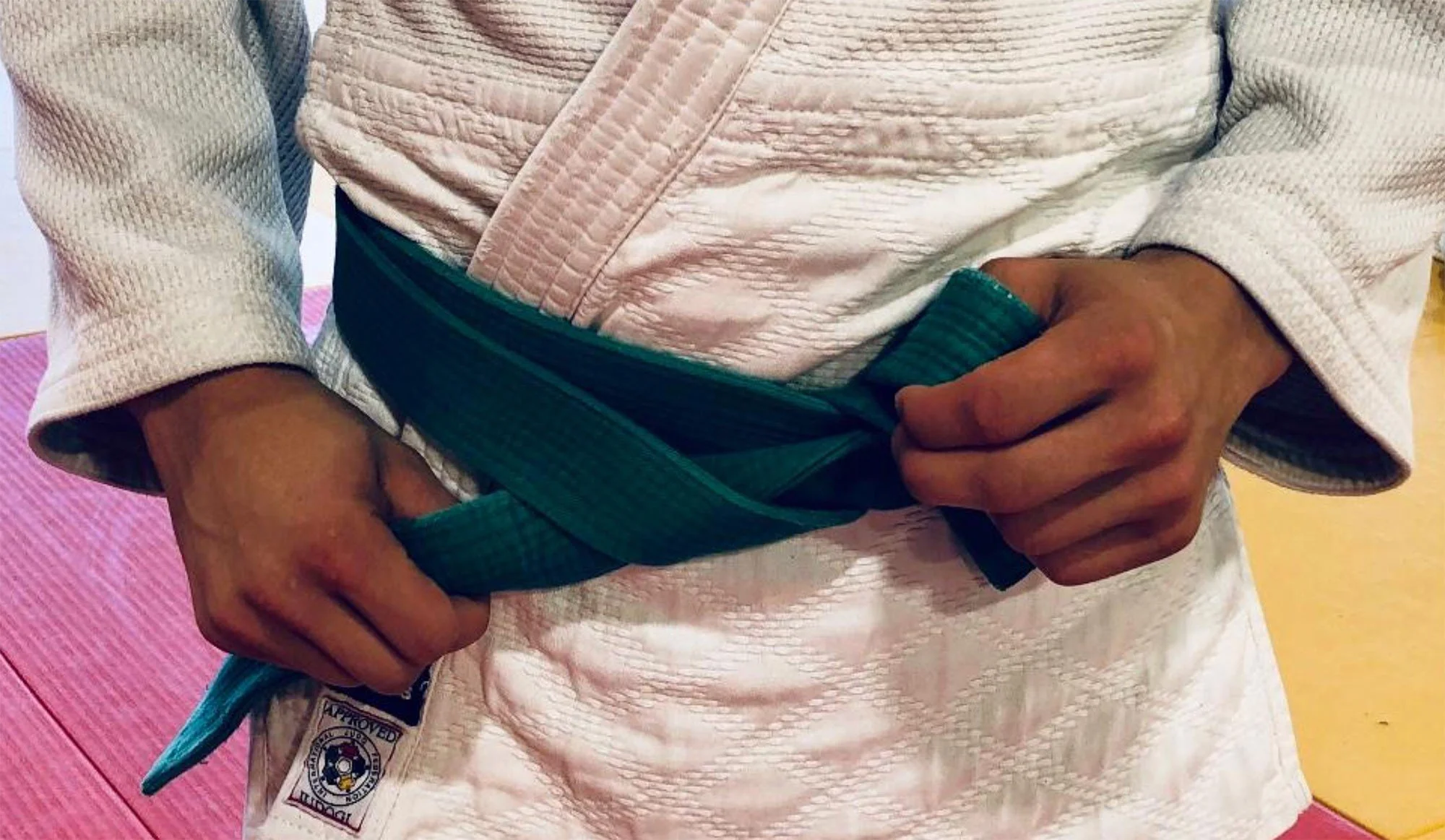
Green Belt (yonkyu rank)
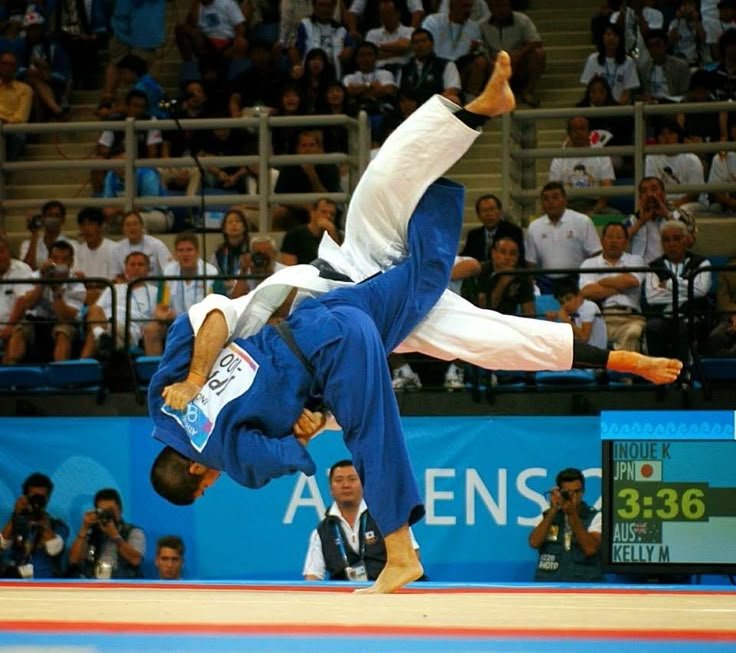
Uchi Mata (inner thigh throw)
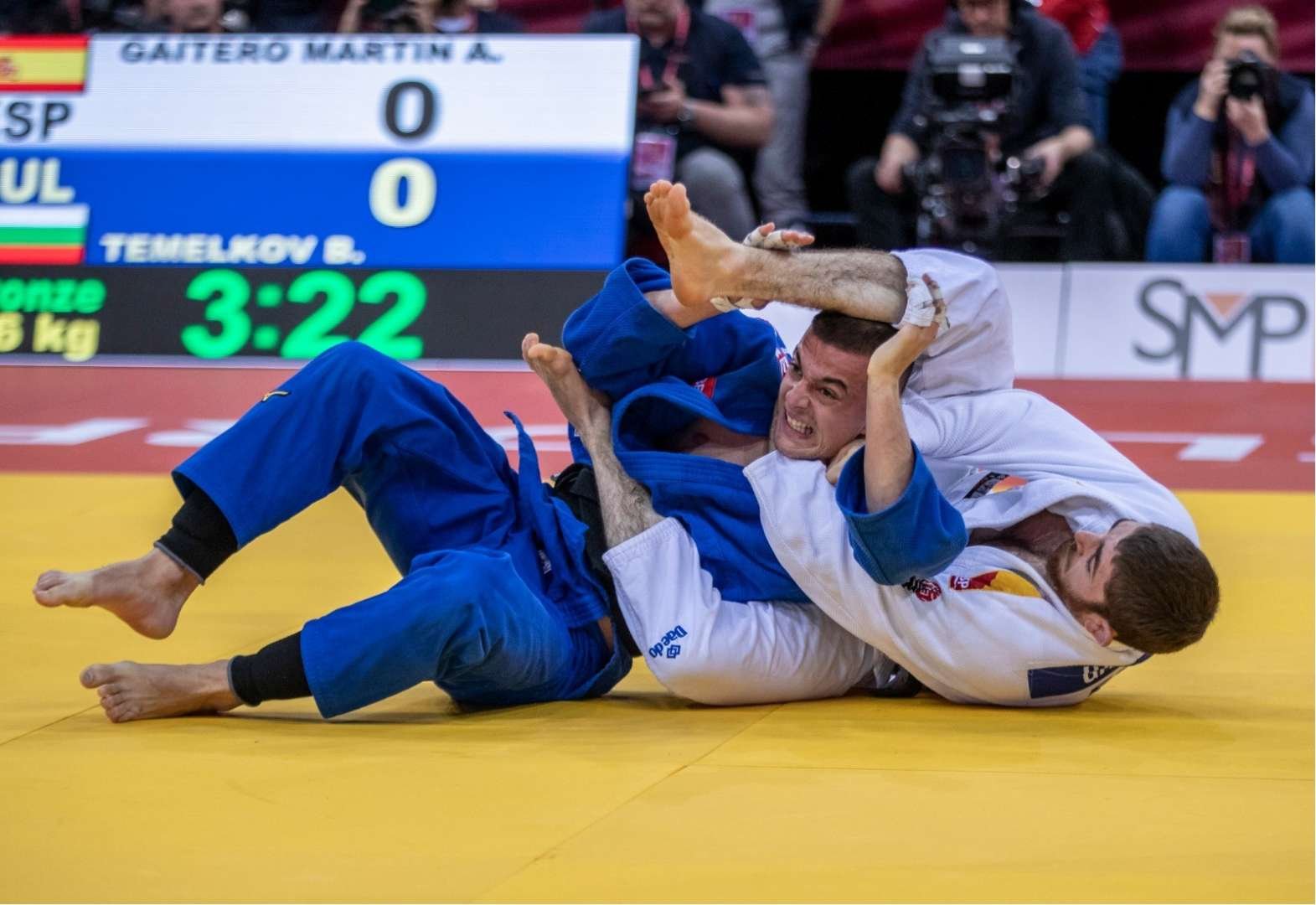
Applying Katame-waza